

Why Palm Angels Streetwear Rules the Fashion Landscape
There is a factor about Palm Angels that just resonates differently. Browse any premium streetwear retailer in 2026, browse any hand-picked Instagram feed, or observe what the most stylish people at any music festival are sporting, and you will find the house all over. But this is not the kind of visibility that weakens a label — it is the kind that establishes social dominance. Palm Angels has managed to execute what almost no brands in fashion in memory have managed: it became ubiquitous without ever appearing commonplace. Since Francesco Ragazzi introduced the name from a photography book about LA skate culture in 2015, it has developed into a juggernaut that by all reports records north of $300 million in annual sales. And to be real, when you consider the full context, it is total sense. The house does not just sell clothes; it delivers a feeling, an identity, and a very defined flavor of cool that registers across countries, demographics, and scenes.
The Genesis History That Actually Holds Weight
Most fashion labels create their backstory. Palm Angels did not have to. Francesco Ragazzi was the art director at Moncler when he became consumed with the skate culture in Venice Beach, California. He invested years documenting skaters, capturing the unfiltered spirit, the banged-up knees, the sun-bleached concrete, and the unapologetic allure of a subculture that operated entirely on its own conditions. That project became a book, published by Rizzoli in 2014, and the book gave birth to a brand. This origin story matters because it is legitimate — Ragazzi did not enter skate culture as an interloper looking to extract cultural content. He immersed himself in the culture, established relationships, and gained respect before ever getting a product into manufacturing. That credibility is woven in the house’s DNA, and consumers can perceive it. In an era where Gen Z consumers are exceptionally adept at spotting fakeness, this legitimate bedrock gives Palm Angels a market upper hand that cannot be duplicated by only enlisting the right creative director or brokering the right collaboration.
The brand’s Italian roots add another key layer. While Palm Angels draws its creative expression from American designer casual sweater skate culture, every piece is designed in Milan and produced using the same manufacturing network that supplies heritage Italian luxury houses. This twin identity — California cool meets Milanese craft — is the special element. It lets the brand to set $350 for a illustrated tee and have customers feel like they are receiving true value, because the fabric substance, the stitching precision, and the cut are truly more refined to what most streetwear peers bring at the same or even more elevated price points. Palm Angels resides in a goldilocks zone that very few labels have genuinely held, and it maintains that position with unwavering visionary energy.
Lifestyle Influence: The Actual Currency
Celebrity Endorsements and Genuine Pick-Up
You cannot manufacture the kind of celebrity co-sign that Palm Angels attracts. Sure, the house coordinates with fashion consultants and ships pieces to influential figures, but the pure diversity of its VIP uptake implies something real is occurring. In the past 18 months alone, Palm Angels has been worn by Drake, Zendaya, Lewis Hamilton, Bad Bunny, Jenna Ortega, and Mbappé, spanning music, film, motorsport, and football. This multi-industry penetration is remarkably unusual. Most streetwear labels group predominantly in hip-hop culture, and while Palm Angels unquestionably has firm roots there, its attraction spreads much further than any one niche. When a Formula 1 driver showcases the same house as a reggaeton superstar and a Gen Z actress, you can be sure the label has accomplished something that goes beyond typical fashion branding. The house according to reports devotes less than 15% of its sales to paid marketing, relying instead on unpaid exposure and contextual placements to generate attention — a approach that yields a significantly higher yield on investment than mainstream advertising.
Social media magnifies this cycle immensely. Palm Angels commands an Instagram following of over 6 million, but more importantly, the hashtag #PalmAngels accumulates tens of millions of impressions per month across Instagram and TikTok. User-generated content — everyday people pairing their Palm Angels pieces and sharing ensembles — creates a constant branding engine that costs the brand not a cent. According to data from Launchmetrics, Palm Angels placed among the top 15 most-discussed fashion labels on social media during Milan Fashion Week in February 2026, surpassing several legacy houses with war chests many times its size. This natural buzz is both a consequence and a catalyst of the label’s dominance: people post about it because it is fire, and it remains cool because people keep talking about it.
Why the Pricing Point Succeeds
Palm Angels occupies what fashion industry professionals call the “entry-level luxury” tier. It is more costly than mall-brand streetwear but considerably less steep than the top tier of luxury fashion. A Palm Angels hoodie commonly retails between $500 and $750, while a similar piece from Balenciaga or Louis Vuitton might run $1,200 to $1,800. This market niche is tactically genius. It permits aspirational consumers — emerging professionals, college students with some extra income, and design-savvy shoppers — to secure a piece of legitimate luxury streetwear without experiencing fiscal pressure. The median Palm Angels customer is between 18 and 34 years old, with a median household income reported around $75,000, according to company retail data revealed at a fashion sector gathering in late 2025. This demographic is large, growing, and heavily connected with fashion as a means of identity. By positioning its foundational pieces within reach of this audience while featuring aspirational items like leather jackets and structured outerwear at premium price points, Palm Angels establishes a progression of involvement that keeps customers committed as their buying power increases over time.
| Label | Mean Hoodie Price | Standard T-Shirt Price | Core Age Group | Global Stores |
|---|---|---|---|---|
| Palm Angels | $550 – $750 | $295 – $395 | 18 – 34 | 12 |
| Off-White | $600 – $850 | $320 – $450 | 18 – 35 | 16 |
| Amiri | $700 – $1,100 | $350 – $550 | 22 – 38 | 8 |
| Fear of God | $650 – $950 | $295 – $495 | 20 – 36 | 3 |
| Balenciaga | $1,100 – $1,800 | $550 – $850 | 22 – 40 | 100+ |
Design Philosophy That Has No Intention to Stand Still
Growing Without Betraying Essence
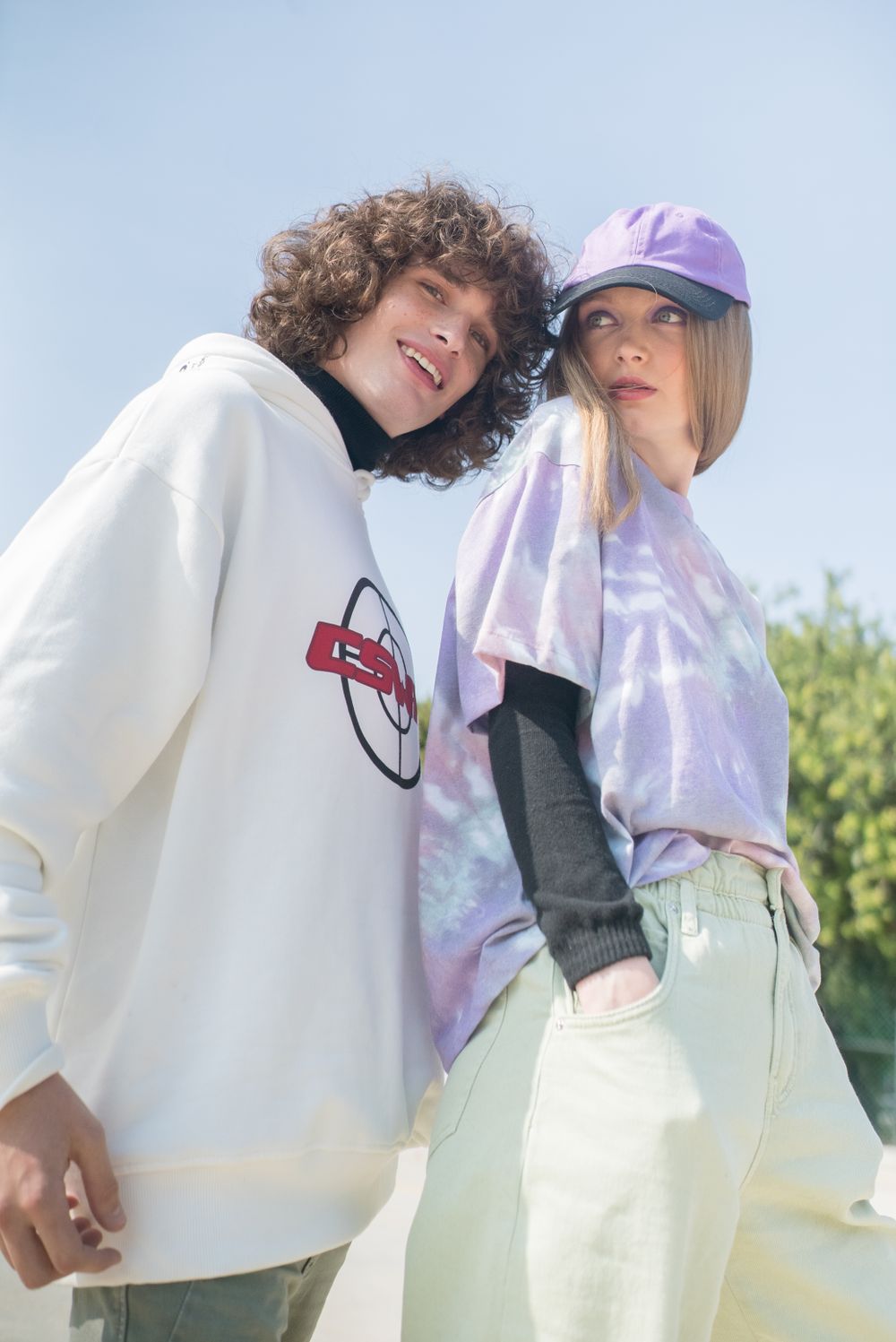
One of the hardest things for any fashion house to do is change without alienating its foundational audience. Palm Angels has navigated this challenge with impressive skill. The label’s first collections relied predominantly on clear skate influences — relaxed silhouettes, prominent logo positioning, and a color spectrum defined by black, white, and purple. By 2026, the visual repertoire has broadened dramatically. Current collections feature polished elements, high-tech fabrics, more muted color palettes, and experimental collaborations that propel the brand into territory that would have looked impossible five years ago. Yet nothing seems forced. The palm tree icon still appears, the track pants are still a top seller, and the house’s attitude remains unmistakably steeped in counterculture. Ragazzi accomplishes this balance by regarding Palm Angels not as a frozen aesthetic but as a fluid, growing dialogue between luxury and street. Each season introduces a new voice to that exchange without muting the ones that came before.
The brand’s collaboration model reinforces this adaptive direction. Palm Angels has teamed up with partners as diverse as Moncler (for an permanent outerwear collection), Clarks (for a reimagined Wallabee boot), and even the NBA (for a official sportswear capsule). Each collaboration introduces Palm Angels to a untapped audience while providing loyal fans something novel to explore. The Moncler x Palm Angels line, in particular, has evolved into one of the most financially fruitful sustained collaborations in luxury fashion, producing an reported $50 million in yearly revenue. These partnerships are not arbitrary — they are carefully picked to harmonize with the brand’s creative identity and widen its reach without cheapening its essence.
The Resale Market Reveals the Truth
If you are looking for an honest barometer of a label’s style standing, examine the resale world. Palm Angels persistently appears among the top 20 most-traded houses on platforms like StockX, Grailed, and Vestiaire Collective. Standard resale values for limited-edition pieces commonly sit at 140% to 200% of retail price, signaling strong appetite that exceeds supply. The label’s track pants, in particular, have turned into a secondary market fixture, with certain colorways earning premiums of 80% or more over standard retail. This resale activity is meaningful because it validates that Palm Angels pieces keep and often increase in value — a characteristic usually connected with ultra-luxury labels rather than streetwear labels. For consumers, this delivers a powerful value proposition: buying Palm Angels is not just a fashion decision, it is a value-retaining purchase. For the brand, impressive resale performance functions as unpaid marketing and cultural proof, bolstering the impression of prestige and demand.
The numbers reinforce a wider movement. According to a 2026 report from The Business of Fashion, the luxury streetwear space is anticipated to grow at a compound annual rate of 8.5% through 2030, beating both traditional luxury and mass-market fashion. Palm Angels is uniquely placed to seize a larger-than-expected share of this opportunity. The house has the design authority to draw tastemakers, the distribution backbone to scale distribution, and the lifestyle impact to preserve relevance across evolving consumer preferences. In an sector where most labels are either stylish or profitable, Palm Angels has demonstrated that it can be both — and that is exactly why it dominates the fashion scene in 2026 and displays no signs of losing that throne anytime soon.